Is the 3,000-Mile Oil Change Rule Still Relevant?
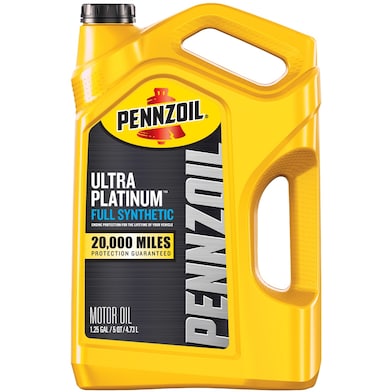
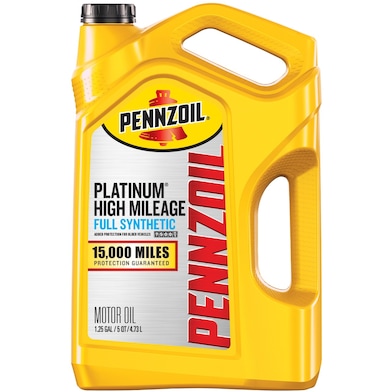
For decades, the 3,000-mile oil change was treated as standard practice for oil changes and maintenance. But modern engines, improved motor oil formulations, and updated manufacturer recommendation guidelines have reshaped what drivers actually need. Today, many vehicles can safely go longer between oil changes, especially when using full synthetic options like Pennzoil Ultra Platinum™ and Pennzoil Platinum® High Mileage. The key is understanding what determines oil life, how oil filters factor into the equation, and how to align maintenance with real-world driving conditions to support long-term engine longevity.
Do I really need to change my oil every 3,000 miles?
For most modern vehicles, the 3,000-mile rule is no longer necessary. Advances in engine design and motor oil chemistry allow for longer-lasting protection, meaning oil doesn’t break down as quickly under normal driving conditions.
That said, shorter intervals may still apply in “severe” environments (such as frequent short trips, stop-and-go traffic, or extreme temperatures), where oil is exposed to more contaminants and undergoes greater thermal stress. In these cases, oil change frequency should be adjusted accordingly rather than relying on outdated mileage rules, and drivers should reference their owner’s manual for guidance specific to their vehicle.
What factors determine how often I should change my oil?
Oil change intervals are influenced by a combination of mechanical and environmental factors:
- Driving habits: Short trips and idling increase contamination and prevent oil from reaching optimal temperature
- Engine design: Turbocharged engines and newer systems may operate under higher stress
- Motor oil type: Full synthetic motor oil resists breakdown longer than conventional oil
- Oil filter performance: The ability to capture and hold contaminants directly impacts oil life
- Manufacturer recommendation: Provides a baseline tailored to the vehicle’s needs.
Among these, the oil filter plays a more critical role than many drivers realize.
Can I safely go 5,000-7,500 miles or more between oil changes with full synthetic oil?
In many cases, longer change intervals are achievable with full synthetic motor oil. These formulations are engineered for stability, helping them maintain viscosity and resist oxidation over time.
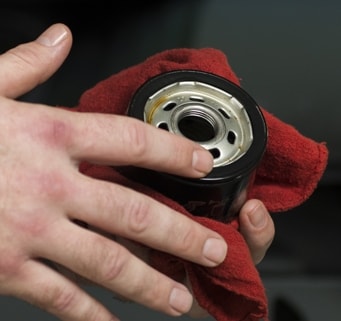
However, extending intervals isn’t just about the oil; it’s also about how well contaminants are managed. As oil circulates, it collects dirt, combustion byproducts, and microscopic metal particles. A high-quality oil filter is essential for trapping these materials before they can circulate back through the engine.
If the filter becomes saturated or less efficient over time, it can limit the effectiveness of even the most advanced motor oil. That’s why both the oil and the oil filter should always be replaced together to maintain consistent engine protection.
Does my car’s oil-life monitor mean I don’t need to change oil as often?
Oil-life monitoring systems estimate oil degradation based on real driving data, including temperature, load, and trip duration. They offer an algorithm-based approach versus fixed mileage intervals.
However, these systems don’t directly measure oil condition or oil filter capacity. They assume that the correct motor oil and oil filter are being used and that both are functioning as intended.
For that reason, drivers should treat oil-life monitors as a guide, while still ensuring oil changes at manufacturer-recommended intervals and proper maintenance practices, including timely oil filter replacement.
My car has a 10,000-mile oil change interval; is that too long?
A 10,000-mile interval can be appropriate for some vehicles, particularly when using full synthetic motor oil under steady driving conditions. But longer intervals increase the importance of maintaining oil system performance as a whole.
Over an extended interval, the oil filter must continue capturing contaminants without restricting flow. If the filter’s capacity is exceeded, unfiltered particles may bypass the filter media and circulate through the engine, potentially increasing wear.
Drivers who frequently operate under demanding conditions may benefit from shorter intervals, particularly in harsh or dusty driving environments, because contamination levels and filtration limits become more significant over time.
Expert Insight: Understanding Modern Oil Intervals
“Motor oil and the oil filter are designed to work as a system,” says Sean Nguyen, Pennzoil Technical Scientist and Automotive Lubricant Specialist. “Even the most advanced synthetic oil depends on effective filtration to remove contaminants. To get the full benefit of extended oil change intervals, both need to be performing at a high level.”
Why Oil Change Intervals Matter for Engine Longevity
Oil change intervals are about more than convenience; they directly impact engine cleanliness, efficiency, and wear protection. Clean motor oil reduces friction and heat, while an effective oil filter continuously removes harmful particles.
Together, they help:
- Minimize engine wear
- Maintain engine cleanliness
- Support consistent performance over time
Using a high-quality full synthetic motor oil such as Pennzoil Ultra Platinum™ alongside a reliable oil filter ensures that both lubrication and filtration are working together to protect the engine across the full interval.
The Bottom Line on the 3,000-Mile Rule
The 3,000-mile oil change rule may be outdated, however a longer interval requires a more informed approach to oil change and maintenance.
The most effective strategy is to:
- Use the manufacturer's recommendation as a baseline
- Choose the right motor oil and oil filter
- Adjust intervals based on driving conditions
By considering both oil performance and filtration, drivers can confidently extend oil change intervals while still protecting long-term engine health.
Additional Resources